Español
 English
 Português

 fetchpriority="high"
decoding="async"
data-parallax
data-speed="0.35"
/>
fetchpriority="high"
decoding="async"
data-parallax
data-speed="0.35"
/>
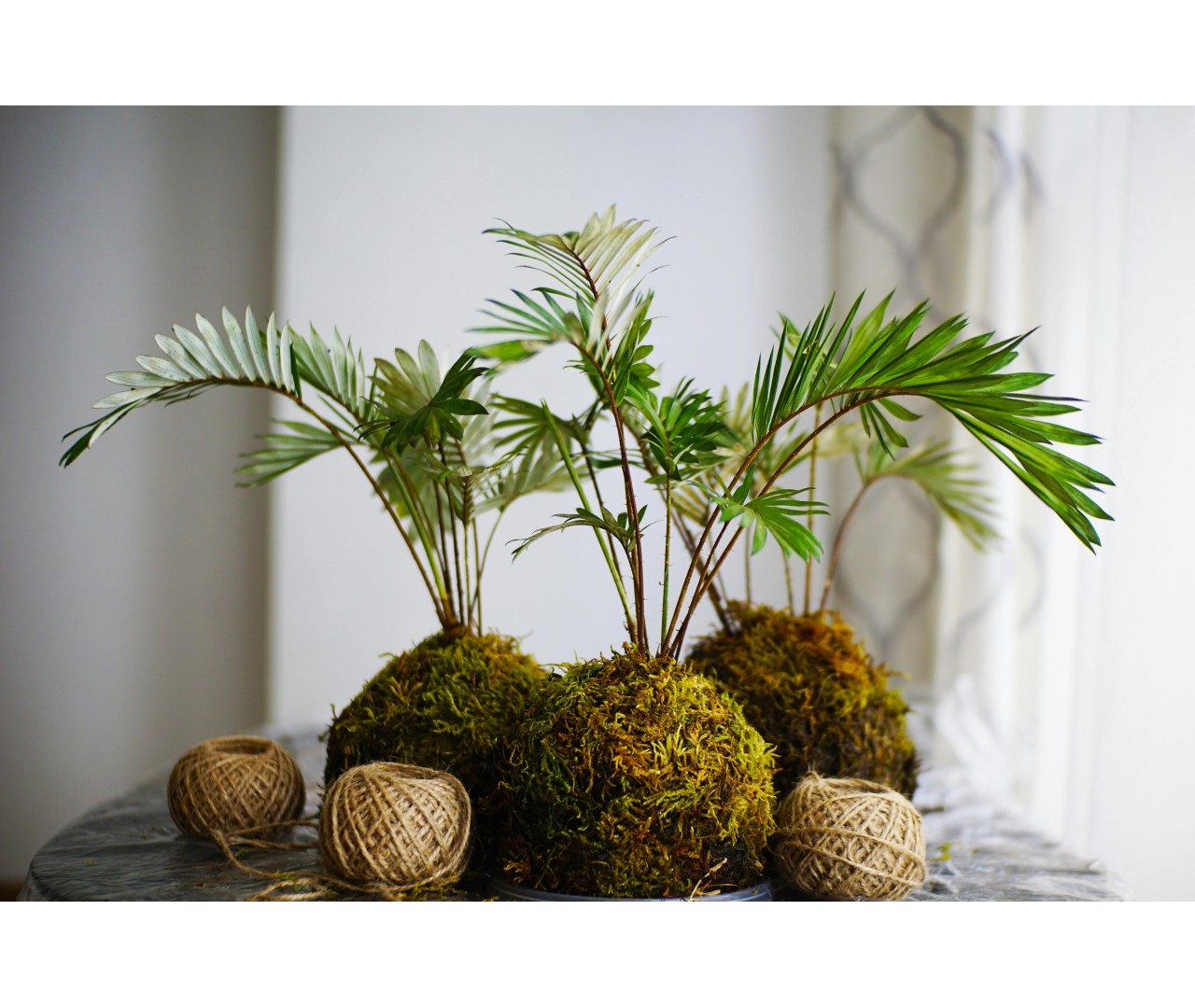
Kokedamas, often referred to as “moss balls,” are a Japanese technique that blends botanical functionality with aesthetic refinement. They consist of growing a plant inside a compact sphere of soil wrapped in moss, allowing the plant to thrive without the need for a traditional pot. This method originates from bonsai and kusamono traditions, where the aim is to highlight the natural beauty of the plant in an organic presentation. Kokedamas integrate seamlessly into bright interiors, studios, offices and decorative settings, providing a natural and minimalist character.
What is a Kokedama? Origin and Concept
The kokedama technique emerged in Japan as a less rigid alternative to traditional bonsai. Instead of using a container, the plant is supported by a mixture of clay soil, peat and moss that envelops the root system. This forms a compact sphere that can be hung with cords or displayed on a decorative tray. The structure retains moisture longer than a conventional pot, but it also requires proper handling of light, watering and general environmental conditions.
Watering
Watering is the most important factor in maintaining a kokedama. The recommended method is immersion. The sphere is placed in a container of room-temperature water and left to soak for five to fifteen minutes. Hydration is complete once the kokedama stops releasing air bubbles, indicating that the substrate has absorbed enough water. It must then be allowed to drain thoroughly before being returned to its usual location. Watering frequency depends on the plant species and season. Generally, in spring and summer kokedamas need watering every four to seven days, while in autumn and winter the interval extends to eight to fourteen days. Signs of dehydration include rigid moss, a noticeably light sphere and dull or drooping foliage. Foul smells, generalized yellowing or fungal growth signal excessive moisture.
Light Requirements
Kokedamas require bright but indirect light. Strong direct sunlight is not advisable, as it can scorch the moss and the leaves. Plants that prefer low-light environments—such as ferns, pothos or philodendron—adapt well to shaded interiors. Brighter spaces suit small ficus, hoyas or scheffleras. Direct midday sun can dry out the moss rapidly and cause leaf burn, so placement should be considered carefully.
Temperature and Humidity
Ideal development occurs at temperatures between 18 and 27 °C (64–80 °F). Cold drafts, heaters and air-conditioning units can negatively impact the kokedama by altering moisture levels. Moderate humidity in the environment helps maintain the integrity of the moss. In very dry spaces, lightly misting the surface or placing the plant near a humidifier can prevent the sphere from drying out.
Substrate and Structure
The substrate is essential for the stability and health of the kokedama. Traditionally, akadama—a granular Japanese clay—is used because it retains moisture without promoting waterlogging. It is often combined with peat to improve aeration. The outer layer consists of sphagnum or living moss, which helps preserve humidity and maintain the sphere’s structure. This combination strikes a balance between moisture retention and adequate oxygenation of the root system.
Recommended Plant Species
The best-suited plants for kokedamas are indoor species that require moderate moisture. Common choices include ferns, fittonias, peperomias, tradescantias, pothos and various philodendrons for filtered-light environments. Brighter areas can support hoyas, ficus benjamina, scheffleras or spider plants. Some shade-tolerant outdoor species, such as bromeliads, aspidistra or staghorn ferns, may also be used. Succulents and cacti are not recommended due to their low tolerance for sustained humidity.
Fertilization
Fertilization should be cautious and minimal. Diluted liquid fertilizers applied every twenty to thirty days in spring and summer are adequate. During winter, fertilization is unnecessary because plant growth naturally slows down. Over-fertilization can damage the roots given the compact nature of the substrate.
Pruning and Maintenance
Routine maintenance includes removing dead or yellowing leaves, monitoring changes in moss color and ensuring that the supporting cords remain firm. Over time, the moss layer may deteriorate and the sphere may require adjustments or partial renewal. A well-maintained kokedama typically lasts two to three years before requiring full reconstruction. When roots begin to protrude or the plant outgrows the sphere, it may be necessary to rebuild the kokedama or transplant to another format.
Pests and Diseases
Common issues include mealybugs, fungus gnats and superficial fungal growth, especially in conditions of excessive watering. Adequate ventilation and avoiding prolonged moisture help prevent these problems. Root rot is one of the most frequent risks when the kokedama remains wet for too long, making proper watering intervals essential.
Decorative Uses
Kokedamas offer a natural aesthetic that combines harmony and simplicity. They can be displayed hanging with cotton or jute cords, placed on ceramic or wooden trays, or arranged in groups to create visual compositions. Their organic appearance makes them ideal for minimalist interiors, workspaces or contemporary environments.
Conclusion
Kokedama is a technique that merges horticulture, design and Japanese tradition. It requires attention primarily to watering and light conditions, but in return provides an elegant and unconventional way to incorporate greenery indoors. With proper care, kokedamas can become long-lasting, functional and highly decorative elements.
Sources
Brickell, C. (Ed.). The Royal Horticultural Society Encyclopedia of Gardening. DK Publishing.
Hartmann, H., Kester, D., Davies, F., & Geneve, R. Plant Propagation: Principles and Practices. Prentice Hall.
Hinesley, L. E., & Derby, S. A. Fundamentals of Horticulture. North Carolina State University.
Miyasaka, S. “Traditional Japanese Horticultural Techniques”. Journal of Asian Horticulture Studies.
Pérez, M. E., & Arana, M. “Sustratos, retención de humedad y cultivo en ambientes controlados”. Revista Iberoamericana de Horticultura.
García, L., & Romano, L. “Humedad ambiental y salud vegetal en cultivos ornamentales”. Anales de Botánica Aplicada, Universidad de Murcia.
Related Products
When Love Rains | Bouquet & Gardens
-215x323.jpeg "Innocence | Bouquet & Garden")
Innocence | Bouquet & Garden
-215x323.png "Wild Rainbow | bouquet with gardens")
Wild Rainbow | bouquet with gardens