Español
 English
 Português

 fetchpriority="high"
decoding="async"
data-parallax
data-speed="0.35"
/>
fetchpriority="high"
decoding="async"
data-parallax
data-speed="0.35"
/>
The New Year is much more than a change of date on the calendar. It represents a symbolic threshold, a moment of closure and, at the same time, of opening. It is the opportunity to leave behind what has been lived, be grateful for what has been learned, and look ahead with hope, intention, and new desires.
Across different cultures and eras, the beginning of a new year has been linked to rituals, celebrations, and symbolic gestures aimed at attracting prosperity, health, love, and balance. Although traditions vary, the deeper meaning remains the same: to renew energy and begin a new cycle.
Why is the New Year celebrated?
The celebration of the New Year has ancient roots. From the earliest agricultural calendars to classical civilizations, the start of a new year marked moments of renewal, seasonal change, and the reorganization of social and spiritual life.
Today, beyond its historical origins, the New Year is celebrated because it responds to a deep human need:
the need to close chapters, bring order to the past, and project the future.
It is a collective moment that invites us to:
-
Reflect on what has been lived
-
Be grateful for what has been learned
-
Let go of what no longer serves us
-
Set wishes and new intentions
A moment for reflection and intention
The transition from one year to another naturally invites us to look inward. Reflections, questions, and desires arise. What do I want to keep? What do I need to transform? What do I wish to attract?
For this reason, the New Year is experienced as both an intimate and shared ritual:
intimate, because it connects us with the personal;
shared, because it is celebrated with others.
In this duality lies its strength: it reminds us that beginnings are not meant to be lived alone.
New Year traditions and symbols
Each culture has developed its own gestures to welcome the coming year. Some of the most widespread share a common symbolic language:
-
Light colors such as white, associated with purity and new beginnings
-
Order and cleansing rituals, symbolizing making space for the new
-
Meaningful objects, representing wishes for abundance, calm, or protection
-
Toasts and gatherings, as acts of celebration and unity
Beyond their form, all these gestures seek the same purpose: to begin with intention.
The home as the setting for a new beginning
The home takes on a central role at New Year. It is the space where the year is welcomed, celebrated, and envisioned. For this reason, its ambiance carries special meaning.
Creating a harmonious, luminous, and serene environment helps emotionally support the beginning of the year. Simple, thoughtful details can transform an ordinary night into a memorable moment.
Flowers and the New Year: a symbol of renewal
Flowers hold a special place in this celebration. They represent life, transformation, and continuity—values deeply connected to the change of cycles.
At New Year, flowers:
-
Bring freshness and visual clarity
-
Symbolize renewal and growth
-
Help create balanced and serene environments
-
Act as a gesture of good wishes, whether for oneself or for others
A bouquet can become a silent reminder of what we wish to cultivate in the year ahead.
Welcoming the year with meaning
Celebrating the New Year is not just about festivities. It is about pausing for a moment, acknowledging the path traveled, and opening ourselves to what is to come. It is choosing the energy with which we want to begin.
Whether through an intimate gathering, a symbolic gesture, or a thoughtful detail at home, every choice adds meaning.
Because every beginning deserves to be welcomed with presence, intention, and beauty.
And because every new year is, at its core, an invitation to begin again.
Related Products
New Soul | Bouquet of flowers
New Year's blessings | Super set
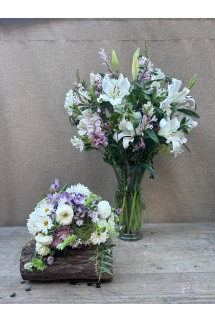
To welcome the New Year | Medium set
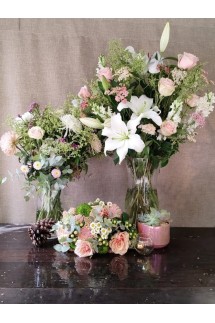
Elegance of the New Year | Super Set