 Español
 English
 Português

 fetchpriority="high"
decoding="async"
data-parallax
data-speed="0.35"
/>
fetchpriority="high"
decoding="async"
data-parallax
data-speed="0.35"
/>
Every December 8th, the Feast of the Immaculate Conception invites families to reconnect with faith, hope, and inner serenity. Beyond the lights, nativity scenes, and holiday decorations, this day is a moment of reflection: a pause to give thanks, ask for protection, and renew the bond with the divine.
Among the most cherished traditions, placing flowers near the image of the Virgin Mary is a gesture that goes beyond decoration, becoming a form of silent prayer. But why did the custom of offering flowers to the Virgin arise?
Historical Origins of the Floral Tradition
The custom of honoring the Virgin Mary with flowers has deep roots in Christian history and has developed over the centuries across cultures and regions.
-
3rd–4th centuries: One of the earliest documented references to offering flowers in liturgical contexts appears in the Traditio Apostolica, around 215 AD. Christians offered roses and lilies as part of religious rituals, symbolizing purity and love.
-
13th–18th centuries: In Europe, Marian devotion was consolidated through practices like "Flowers to Mary," hymns, and poems dedicated to the Virgin. Each day of May was associated with a flower and a Marian virtue, creating a popular liturgy still alive today.
-
16th century: Saint Philip Neri in Rome taught young people to adorn the Virgin’s image with flowers, sing praises, and offer acts in her honor, spreading the tradition among the faithful.
-
17th century: In the Dominican novitiate of Fiesole (Florence), Father Angelo Domenico Guinigi founded the Comunella confraternity, dedicating the month of May to the Virgin with devotional exercises, including the offering of flowers.
-
19th century: The Catholic Church institutionalized May as the Marian month. The practice of offering flowers to the Virgin became firmly established in Christian communities worldwide.
The Spiritual Language of Each Flower
Honoring the Virgin with flowers is not just an aesthetic act: it is a moment of connection and reflection. Each petal can be a silent prayer; each scent, a message of gratitude and hope.
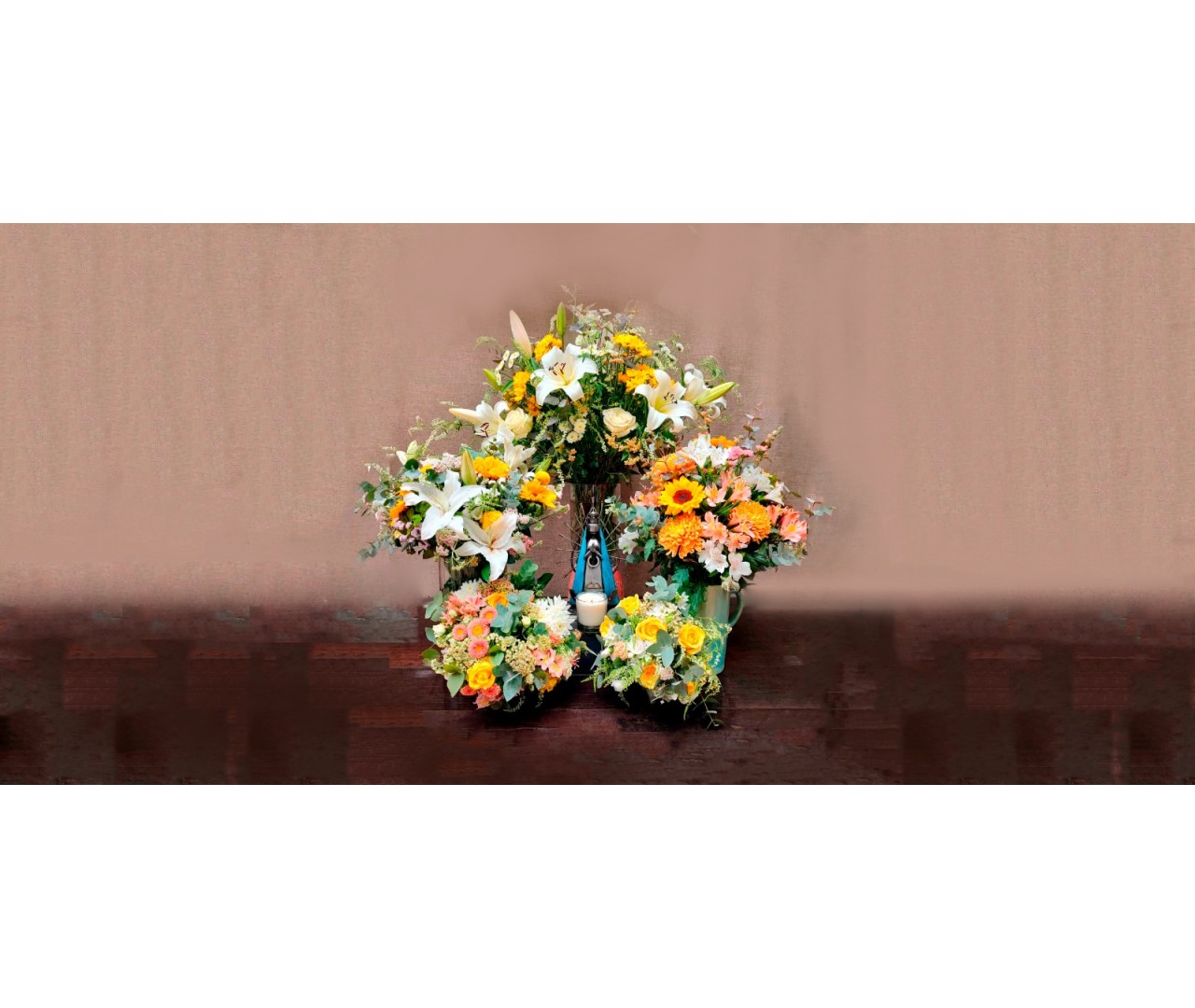
You can create a small home altar with fresh flowers, a candle, and a written intention, or simply place a bouquet beside the Virgin’s image. The key is not the number of flowers but the intention with which the tribute is offered. This simple act becomes a profound gesture that connects generations and strengthens faith.
Each flower carries a message and can reflect our deepest intentions: white lilies (azucenas) symbolize purity; white or pink roses, love and devotion; blue hydrangeas remind us of the Virgin’s mantle; and daisies represent inner joy.
Celebrate with Intention and Beauty
Offering flowers to the Virgin reminds us that the simplest gestures can carry profound meaning. In every flower, gratitude, love, and hope are deposited; it becomes a bridge between the earthly and the spiritual, a reminder that beauty and devotion can coexist in harmony.
